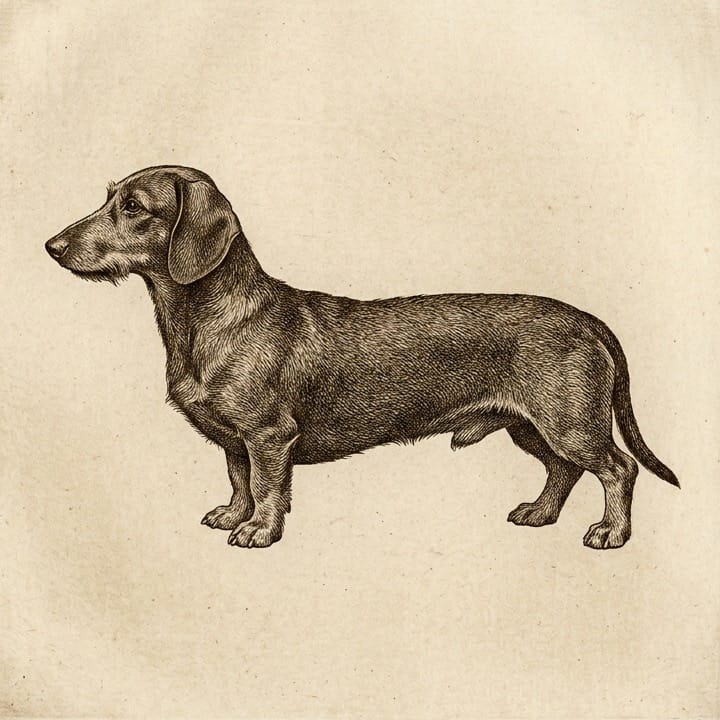
How to Pick Up a Dachshund (Most Owners Do It Wrong)

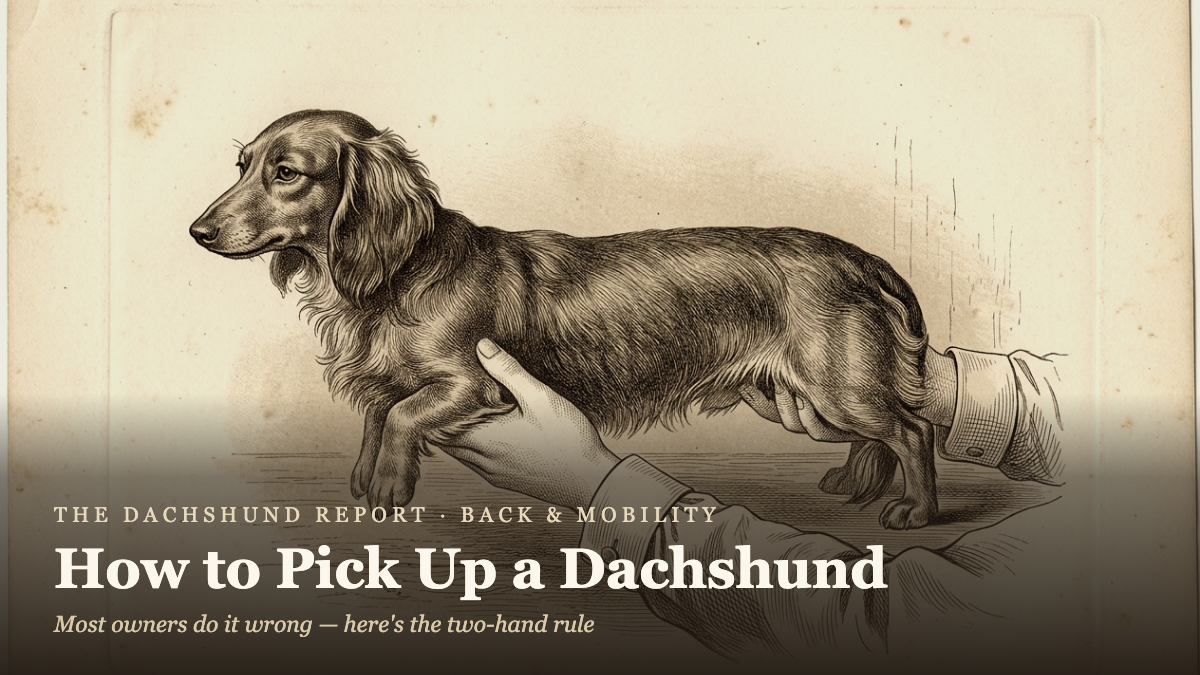
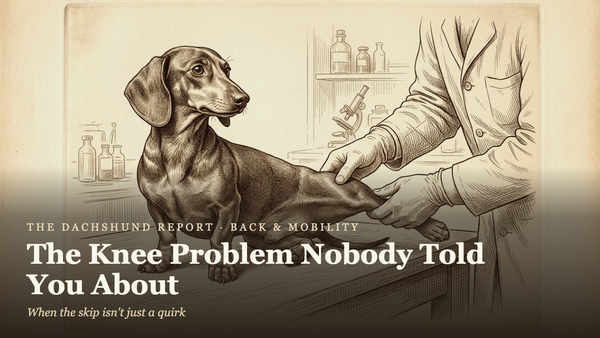
The right way to pick up a dachshund: one hand under the chest, the other hand under the rump, lift slowly, and keep the whole body level — like you're carrying a tray you really don't want to tip. Hold them supported against your body, and lower them all the way to the floor when you're done. The classic mistake is the one-handed scoop under the front legs that leaves the back half dangling — exactly the bend a long spine handles worst.
Picture the scene.
A well-meaning houseguest — lovely person, terrible technique — spots your doxie, lights up, and hoists him by the armpits like a toddler at the airport.
Front legs up. Back half hanging in space like a furry question mark.
And every dachshund owner within visual range makes the same involuntary noise. A sort of strangled hnnng.
Here's the thing though: most of us learned the right way late, after years of doing the airport-toddler lift ourselves. Nobody hands you a manual at the shelter.
So consider this the manual. It takes ninety seconds to learn and it's one of the few back-protection habits that costs zero dollars and works every single day.
What's the right way to pick up a dachshund?
The technique comes straight from the people who deal with the aftermath of doing it wrong — DISA, Australia's dachshund IVDD support organization, and the specialist vets at SASH (Small Animal Specialist Hospital), whose sports-medicine vet and rehabilitation therapist made whole videos on this exact maneuver.
Four steps:
1. One hand under the chest. Slide it in flat, supporting the ribcage — not gripping the front legs, supporting the chest.
2. One hand under the rump. This is the hand most people forget, and it's the whole trick. The rear hand carries the back half so the spine never has to hang.
3. Lift slowly, keep them level. DISA's guidance is exactly this: lift slowly, keeping the body level. No swooping, no vertical baby-hold. Think tray of drinks. Think fragile baguette. Think — and I say this with love — think of them as the world's most opinionated bridge, and you're moving the whole bridge at once.
4. Keep supporting the back while you hold them. Once they're up, tuck them against your body so your torso does some of the work — one arm still under the chest, the other still under the rear. A supported doxie relaxes. A dangling doxie squirms, and squirming mid-air is how good lifts go bad.
Setting them down is half the job, by the way: lower them slowly until all four paws touch the floor, then let go. DISA is blunt about this one — never drop a dachshund the last few inches. The dismount is a jump with extra steps, and we've covered what repeated drops do to a long back.
What's the wrong way to pick up a dachshund?
The full rogues' gallery, per DISA's don't-list:
The armpit scoop. Picking them up by the upper body — hands under the front legs, rear dangling. This hangs the entire back half of a long dog off their mid-spine. It's the most common lift in the world and it's the worst one.
The bend-and-twist. Never make a dachshund bend or twist on the way up. That means no sideways swinging, no folding them to fit the moment, no yanking them out from under the bed at an angle. Square up, then lift.
The drop-off. Releasing them at knee height because they were wiggling. Lower them all the way. Wiggle management is a treats-and-patience problem, not a gravity problem.
The one-armed forklift. Any lift where one hand does everything and physics does the rest.
Why does this matter more for a doxie than for your friend's labrador? Because dachshund spinal discs age early — Cornell's canine health center describes how the discs in short-legged breeds begin hardening between birth and one year old — and SASH notes the breed is predisposed to spinal injury, which is why their experts recommend careful lifting even for healthy dachshunds. The lift you do twenty times a day is either twenty tiny favors to that spine, or twenty tiny insults.
How do I teach kids and houseguests to pick up my doxie?
This one's directly in DISA's do-list: show family and friends how to hold a dachshund properly before letting them interact with your dog.
My house rules, feel free to steal them:
Little kids don't lift. Ever. They sit on the floor, and the doxie comes to them. A small child physically cannot support both ends of a long dog — it's not a discipline issue, it's an arm-length issue. Floor snuggles only.
Bigger kids and adults get the ten-second demo. "One hand here, one hand under the butt, keep him flat like a tray." Then supervise their first attempt. People remember it — it's weirdly satisfying to do right, like picking up a cat that actually wants to be picked up.
The houseguest rule. Announce it cheerfully before the dog is in anyone's arms: "He's a two-hands dog!" Nobody's ever offended. Doxie people just say "of course he is."
Why does my dachshund yelp when I pick him up?
Stop. This one's important, and it's the reason this article isn't just etiquette.
A dachshund who yelps, flinches, or tenses when lifted — especially one who never used to — is not being dramatic. DISA warns that distress when being picked up, particularly yelping, is often a sign of an impending IVDD episode. Pain on handling also sits alongside the other early warnings I've written about — the 8 early signs a doxie's back is bothering them — and it's one of the signs vets take most seriously.
So if your doxie yelps when you lift them: call your vet. Today, not next week. If it's a false alarm, you've lost a co-pay. If it isn't, you've caught the thing early — and with dachshund backs, early is everything. (The full picture of what you'd be catching is in the back-problems handbook.)
And if your dachshund has already had a disc episode or spinal surgery: SASH notes special care is needed for those dogs — get your vet or rehab team to physically show you the modified technique. That demo outranks any article, including this one.
Anyways...
Tonight you'll pick up your doxie roughly six more times — bed, couch, car, "he looked lonely," and twice for no reason at all.
Two hands, level tray, all four paws on landing.
That's the manual. Pass it on to the houseguests.
FAQ
Is it OK to pick up a dachshund under the front legs?
No — that's the classic mistake. Lifting under the front legs leaves the back half unsupported and hanging, forcing a long spine into exactly the flexed, loaded position it handles worst. Always use two hands: one under the chest, one under the rump, keeping the body level.
Why does my dachshund cry or yelp when I pick him up?
Treat it as a red flag, not an attitude. Dachshund IVDD organizations warn that yelping when lifted is often an early sign of a disc problem — and it's on the standard early-warning lists vets use. Call your vet and describe exactly when the yelp happens; until you're seen, minimize lifting and use the two-handed level technique when you must.
Can children pick up a dachshund?
Small children shouldn't lift a dachshund at all — they can't support both ends of a long dog, so make "floor cuddles only" the house rule. Older kids and adults can learn the two-handed technique in ten seconds; DISA specifically advises showing family and friends the proper hold before they handle your dog.
Do dachshunds like being carried?
Most tolerate it happily when they feel fully supported — it's the dangling they hate, even if they don't show it. Supported chest, supported rear, body tucked against yours, and most doxies settle right in. A dog that squirms or protests every carry may just prefer their own four feet — or, if the protest is new, may be sore and worth a vet call.
How do I pick up a dachshund with IVDD or after back surgery?
With your vet team's specific instructions — this is the one case where a general article shouldn't be your guide. Specialist hospitals like SASH note that dogs with previous spinal surgery need special care when lifted, and your rehab team can demonstrate the exact modified hold for your dog's situation. Keep the universal principle: slow, level, both ends supported, no bending or twisting.
Free: The Dachshund Back Handbook
The proper lift is one page of the bigger playbook — the 8 early warning signs, the furniture setup, the weight math, and the exact checklist I'd bring to a vet visit. I put all of it in one free guide.
It's short, it's free, and it might be the most useful thing you ever read about your wiener dog.
Grab the free Back Handbook here
(Educational only — not veterinary advice. When in doubt, call your vet. Always call your vet.)